What to Expect at the Dry Cleaner: A Complete Guide from Drop-Off to Pickup
There are probably three garments in your closet right now that you have been meaning to take to the dry cleaner. One of them has a stain. Another has a tag that says dry clean only, and you have been pretending not to notice. The third you genuinely forgot about until just now.
If you relate to even just one of these, this guide is for you. After we explain a few things worth knowing before your first visit, you’ll wonder why you waited so long.
1 of 5 | Things to Do Before You Drop Off Clothes for Dry Cleaning
1. Check the Care Labels Before Anything Else
Before you grab that garment off the hanger, find the care label. That small tag tells you and your cleaner exactly what the fabric can handle. Look for the circle symbol. That is the dry clean indicator. A plain circle means safe to dry clean. A circle with an X through it means skip the dry cleaner entirely for that piece.
Do not skip this step even if you are fairly confident something needs to be dry cleaned. Assumptions lead to damaged clothes, and that is a headache nobody wants.
2. Point Out Every Stain, Even the Old Spots
Once you are at the counter, be up front. Point out every stain, tell the cleaner where it is, what caused it, and roughly how long ago it happened. That detail matters because different stains respond to completely different treatments. A grease mark from last night gets handled differently than one that has been sitting in the fabric for three weeks.
A stain that does not get pretreated might not fully come out, and by the time you notice it at pickup, the opportunity to address it properly has already passed.
3. Empty Every Single Pocket
Tissues, receipts, lip balm, loose change. Anything left in a pocket can damage the garment during cleaning or leave residue that is difficult to remove. Dry cleaning solvents are strong, and they will interact with whatever you leave behind. A forgotten lip balm melts and spreads. An uncapped pen is a disaster. Ten seconds at the door before you leave saves you from an awkward conversation later.
4. Flag Any Damage or Delicate Details
Have a loose button? A small tear along the seam? Beading or embroidery that feels fragile? Say something at drop-off, not after. Your cleaner needs to know what was already there so they can work around it and avoid confusion about whether something happened on their watch.
This is especially worth mentioning for anything vintage, heavily embellished, or made from mixed fabrics.
2 of 5 | How Your Clothes Are Cleaned at the Dry Cleaner
So here is the part you have probably wondered about. What actually happens to your clothes once they disappear behind that counter? Understanding the full process also explains something you will probably notice right away on pickup: why some garments come back looking almost brand new after just one visit.
Step 1: Intake and Tagging
The moment your clothes are handed over, they get inspected and tagged. The cleaner looks over each piece for existing stains, damage, missing buttons, and anything that needs special attention. Every item receives a unique tag, so your clothes never get mixed up with anyone else's order.
Step 2: Pretreatment of Stains
Before anything goes into the machine, visible stains get treated individually by hand. The cleaner applies targeted solutions based on the type of stain, which is exactly why telling them what caused it at drop-off pays off here. Protein-based stains, such as blood or sweat, respond to enzyme treatments. Oil and grease respond to solvent-based agents.
Step 3: The Cleaning Cycle
Your clothes go into a large machine that circulates chemical solvent through the load, not water. The absence of water is exactly what makes dry cleaning safe for structured garments and fine fabrics that would shrink, stretch, or bleed color in a standard wash. At Liberty Dry Cleaners, we use eco-friendly cleaning technology that protects your garments while being gentler on the environment.
Step 4: Drying and Post-Inspection
Once the cleaning cycle finishes, the machine extracts the solvent from your clothes and filters it. Most professional cleaners recycle and reuse it, which significantly cuts down on waste. Your garments then dry inside the same machine using warm, controlled air. Once dry, each piece is inspected again before moving to finishing.
Step 5: Pressing, Finishing, and Final Review
This is the step that makes professionally cleaned clothes look so noticeably different when you pick them up. Each garment is individually pressed or steamed, reshaped where needed, and given a final quality check before it is bagged. Structured pieces such as blazers and trousers receive particular attention here to make sure they come back sharp, not just clean.
Step 6: Packaging for Pickup
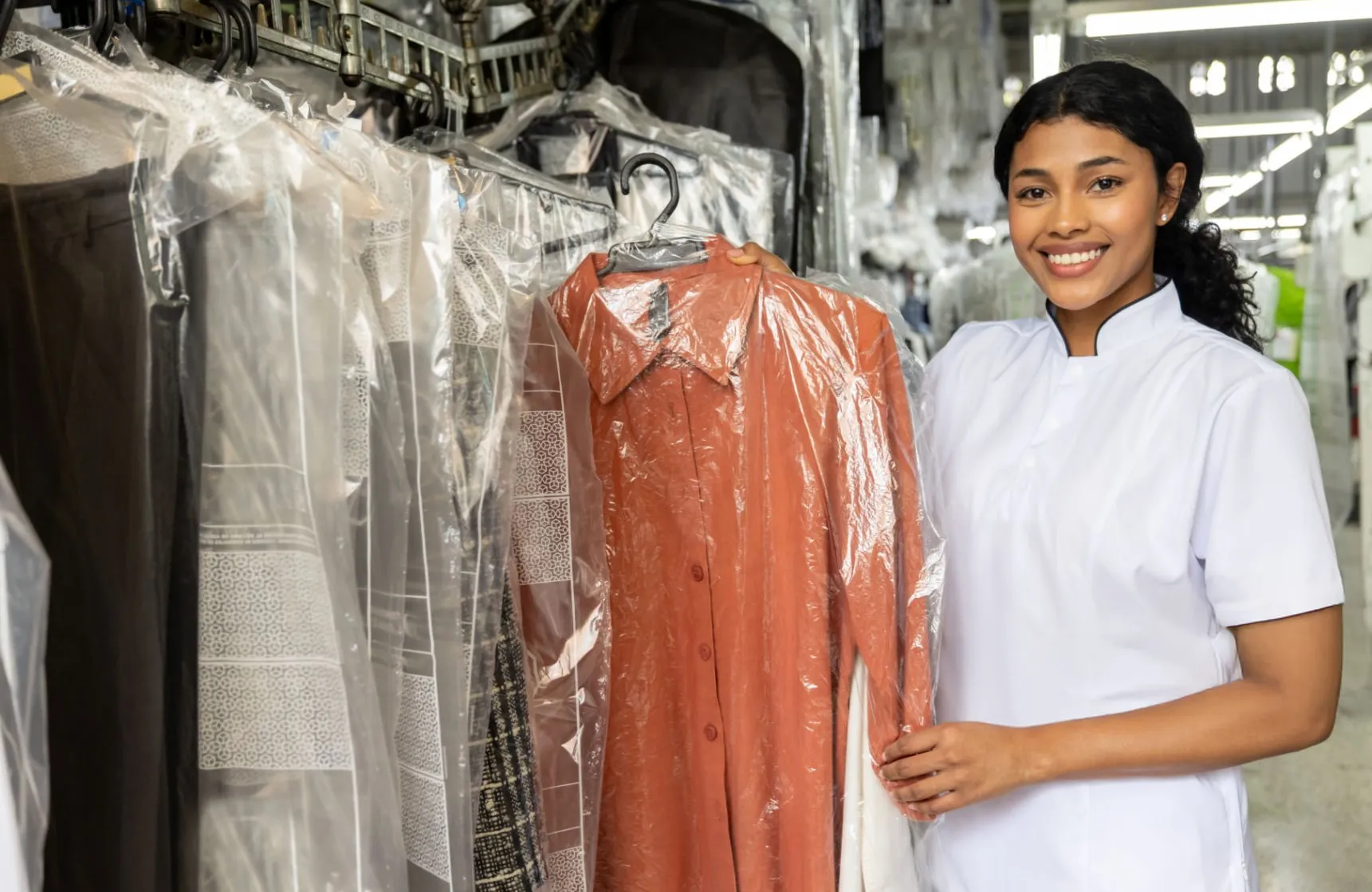
Your clothes get covered in a thin polybag for transport and held until you come to collect them. Here is something worth knowing when you get home: take them out of that plastic bag right away and let them air out before putting them in the closet. That bag is for transport only.
3 of 5 | What to Check When You Pick Up Your Clothes
Do not wait until you are home to inspect what you picked up. Check everything at the counter while someone is still available to address any concerns on the spot.
Go straight to the areas you flagged at drop-off. Did the stain come out completely? Is the fabric sitting the way it should?
Here is a quick checklist before you leave the counter:
- Stain areas checked front and back
- Buttons, beading, and decorative details intact
- Seams and structure on tailored pieces holding correctly
- Color consistent across the full garment
- Smell neutral or very faintly chemical, not strong
A faint chemical scent on the pickup is completely normal and will air out within a few hours. A strong, persistent smell is worth mentioning before you leave.
4 of 5 | How to Store Dry Cleaned Clothes the Right Way
This is where most people quietly undo a good cleaning without realizing it. The plastic bag in which your garment comes back is for transport, not storage. Remove it as soon as you get home.
Storage habits worth building from your very first visit:
- Lose the plastic: use breathable garment bags only for anything stored longer than a day or two
- Use the right hangers: wooden or padded hangers support shoulder shape; wire hangers distort it over time
- Give clothes room: a packed closet traps humidity and causes creasing; garments need airflow
- Watch for humidity: if your closet is on an exterior wall, a cedar block or small moisture absorber is worth adding
Good storage habits protect the results of a professional clean. A garment that goes in well and comes out in great condition deserves to stay that way.
5 of 5 | Which Clothes Actually Need Dry Cleaning
Start by looking at the care label. A circle symbol means the garment is designed for dry cleaning. A crossed-out circle means it should never be dry cleaned, regardless of the fabric.
Garments that consistently get the best results from dry cleaning:
- Suits and structured blazers: internal construction does not survive repeated water washing
- Silk blouses and dresses: prone to water spotting and dye bleeding without professional handling
- Cashmere and fine wool: can shrink or felt in water even with careful hand washing
- Formal and eveningwear: delicate embellishments, complex linings, and fine fabrics all require professional care
- Wedding dresses and heirloom pieces: the stakes are too high to risk anything other than professional handling
If you are ever unsure if something should be dry cleaned, a quick call before you wash it at home is worth the time.
Your First Drop-Off Is Easier Than You Think – Try the Dry Cleaning Service at Liberty Dry Cleaners Today
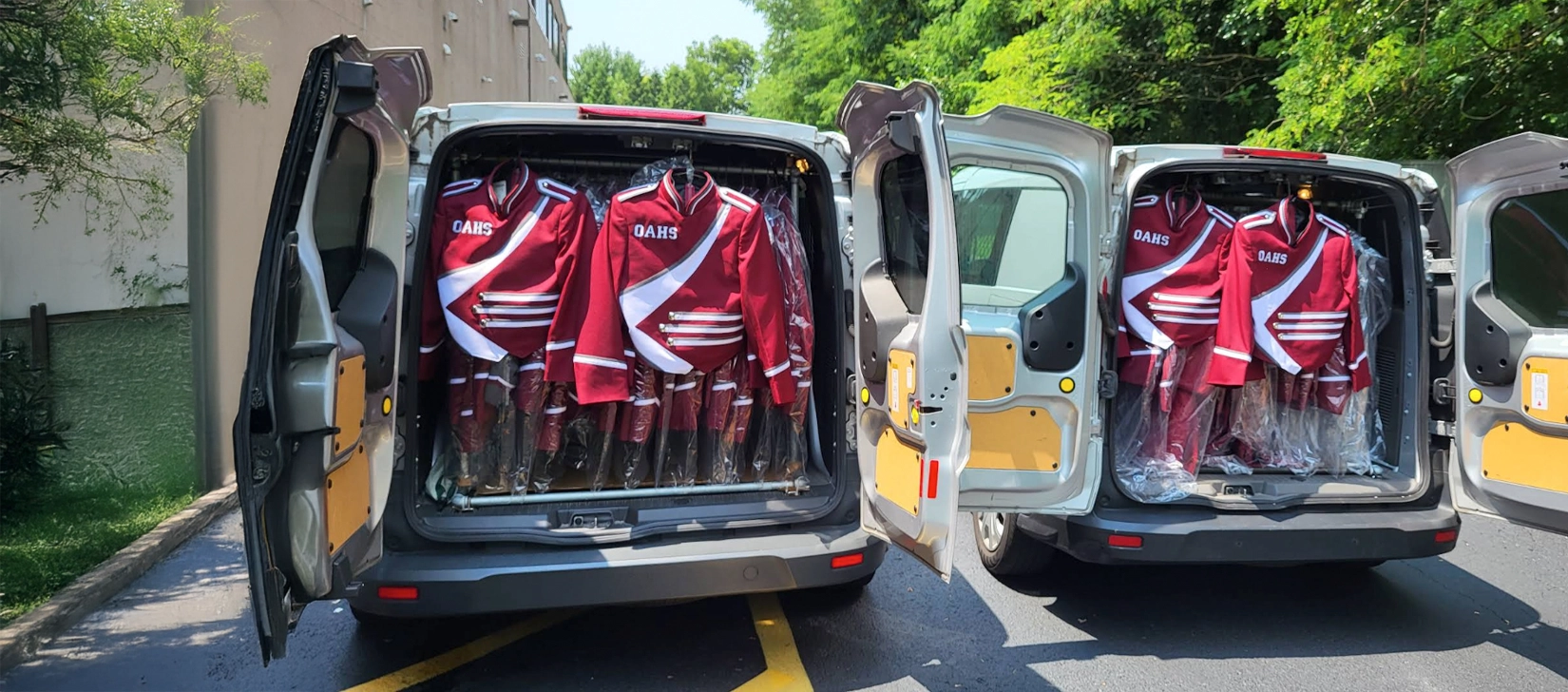
Some pieces simply deserve better than a home washer can offer. Whether it is a silk blouse, a tailored suit, or that coat you have been nervous to ruin, the team at Liberty Dry Cleaners has the expertise and professional dry cleaning technology to handle it with the care it deserves.
As the trusted dry cleaning choice for Brandywine Valley residents, backed by over 100 five-star reviews, we have built our reputation on consistency, precision, and treating every garment like it matters.
Schedule your FREE Pickup and Delivery Service online or stop into one of our two locations. We will walk you through every step the moment you walk through the door.
Kennett Square
- 120 Onix Drive, Kennett Square, Pennsylvania, 19348
- Phone: 610-925-3478
- Email: info@libertydrycleaners.net
Concordville / Glen Mills