5 Wedding Dress Stains That Require Professional Cleaning to Fully Remove
Some wedding dress stains lift right out with the right product and a little patience. Others look minor in the moment and quietly become permanent the second you reach for a damp cloth.
The difference isn't always obvious to the eye, which is why so many dresses end up damaged by the cleanup attempt rather than the original spill. These are the five stains that almost never respond to home treatment, and why professional cleaning handles them differently.
1) Oxidation Yellowing
The most common wedding dress stain is one most brides don’t notice until months later. The dress looked fine when you packed it away. Then you open the bag and find yellowing at the underarms, waist, neckline, or hem.
What Caused It
During the wedding, your dress absorbed colorless compounds – perspiration, body oils, traces of sugar from champagne or cake. They weren’t visible at first. Once the dress was folded, stored, and exposed to air, heat, and light, those compounds oxidized and turned yellow or amber. It can happen in weeks. It often takes a full year.
Why Home Treatment Makes It Worse
- Bleach and OTC whiteners strip the protective finish from silk and satin and can cause further color damage without breaking down the oxidation compound
- Hydrogen peroxide, the most commonly recommended DIY option, is particularly risky on dyed or embellished dresses; it can lighten dye unevenly or damage embroidery and beading
- Adding any liquid before a professional assessment narrows your treatment options
What Professional Cleaning Can Do
Pretreatment uses enzyme-based agents and targeted solvents designed to break down oxidation compounds at the fiber level, not just at the surface. These aren’t available at retail, and they require knowing how much contact time each fabric type can tolerate.
Can a yellowed wedding dress be whitened? Yes, in most cases, significantly. Yellowing caught within six months of the wedding responds well to professional pretreatment. Advanced yellowing held for a year or more may be partially permanent, especially on silk or if home treatment has already been applied.
The window for full restoration closes with time. Get a professional assessment as soon as you notice it.
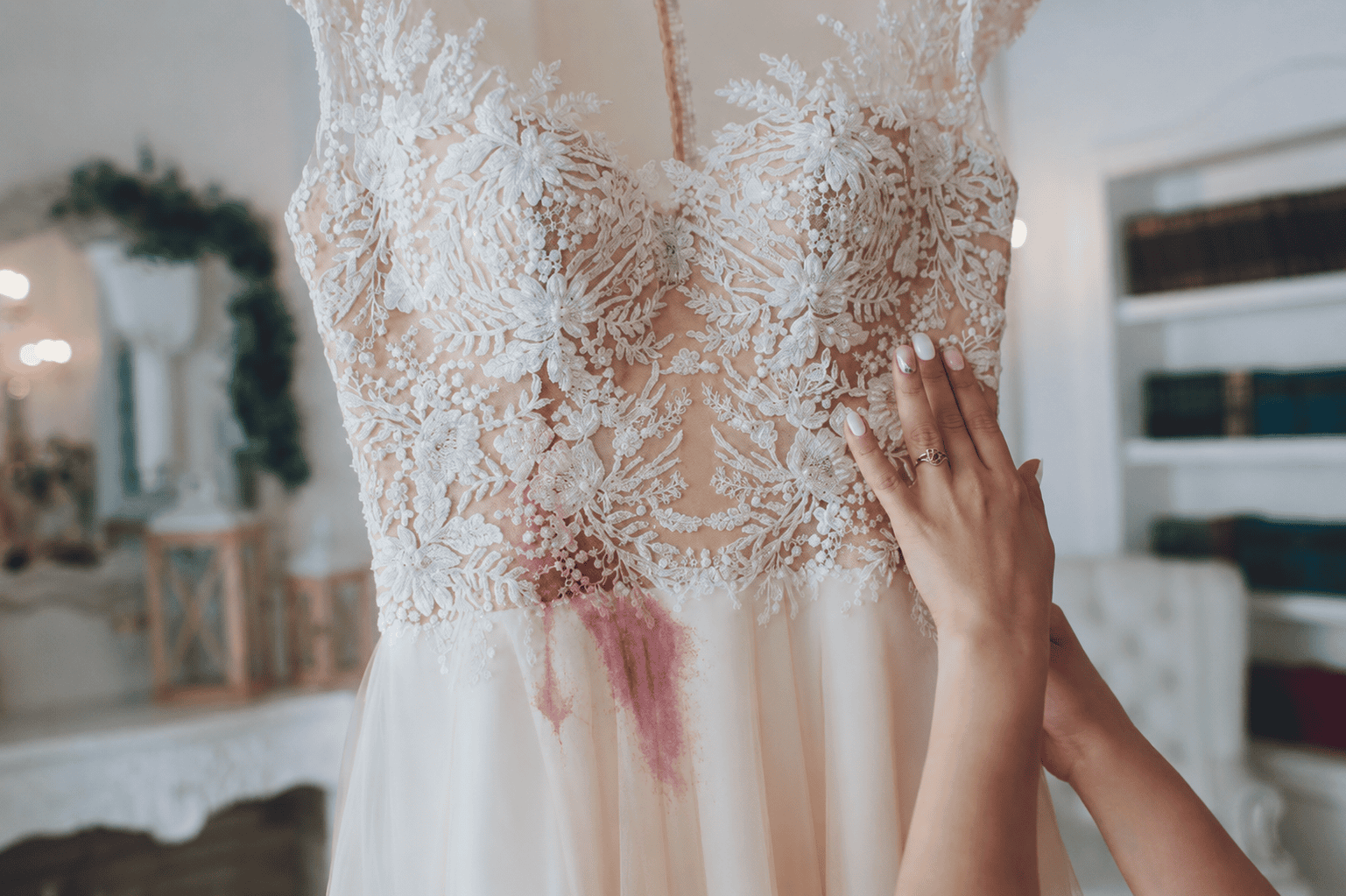
2) Red Wine
Red wine on a wedding dress is a crisis moment. The instinct is to act fast, and that instinct is exactly what makes professional removal harder.
The Single Most Important Thing To Know Right Now
Any heat applied to a red wine stain can set it permanently. Hot water, a hair dryer, leaving the dress in sunlight to dry – all of these cause tannin compounds to bond more deeply with the fabric. A dress heat treated after a spill may not fully respond even to professional pretreatment.
Why The Stain Is So Persistent
- Tannins (the compound giving red wine its color) bond strongly to natural protein fibers such as silk and wool, and to cellulosic fibers such as cotton and rayon
- On white or ivory fabric, that bond is accelerated by the contrast between the dark pigment and the light background
- Rubbing, even gently, pushes tannins deeper into the fiber weave and can physically damage delicate fabric surfaces
What To Do Right Now
- Blot gently with a dry, clean cloth, no pressure, no rubbing
- Do not add any liquid
- Store the dress flat in a cool, dry place away from sunlight
- Take it to a professional before attempting anything else
What professional wedding dress cleaning does differently: dye release pretreatment agents and controlled solvent application can lift tannin compounds that water-based methods cannot dissolve, without risking the fabric.
3) Makeup Foundation and Concealer
Foundation transfer is one of the most predictable bridal stains, and one that worsens with the most common response.
The problem isn’t just the pigment. It’s the oil.
Most foundations contain silicone, oils, and pigments, none of which are water-soluble. When you dab with water or a damp cloth, you don’t remove anything. You spread the oil component into the surrounding fabric, turning a small stain into a large spot.
Why Silk and Satin Are Especially Vulnerable
These fabrics absorb both the oil and the pigment at the same time. The oil component often degrades the fiber surface, which means even after the visible pigment is partially removed, a mark remains. That’s not something you can dab away at home.
What Professional Cleaning Uses Instead
- Solvent-based pretreatment agents that dissolve oil compounds before the main cleaning cycle
- Enzyme treatment for any protein-based compounds in certain foundation formulas
- A two-stage process that addresses the oil and pigment components separately
That two-stage approach is exactly why home treatment consistently fails here. Water moves the stain. Solvent removes it.
4) Grass Stains on the Hem
Outdoor wedding ceremonies and garden venues leave green staining on white or ivory hems. It looks like it should wash out. It usually doesn’t, not fully.
Why Grass Stains Resist Standard Cleaning
Chlorophyll bonds to fabric through a different mechanism than food or beverage stains. Standard laundry detergent is formulated for grease and water-soluble soils. It doesn’t specifically target the chlorophyll bond, which is why a wash cycle often reduces the stain without actually eliminating it.
What Makes Hem Staining More Complex Than It Looks
A grass stain on a bridal hem isn’t just chlorophyll. It typically involves:
- Soil and embedded pathway particles worked into the fabric weave
- Multiple organic compounds beyond the visible green surface
- Road grit or hard surface residue from pavement contact
Treating the color without addressing the embedded particles leaves a stain that looks lighter but isn’t actually gone.
What Professional Wedding Dress Cleaning Achieves
Enzyme pretreatment combined with controlled professional cleaning addresses all of these layers at once. With prompt treatment, within the first few weeks, most grass staining on bridal hems responds well. Staining already treated at home with the wrong products is harder, but usually still improvable.
5) Wax, Candle Drips, or Adhesive
Candles are standard at receptions, and wax drips on bridal dresses are more common than most people expect. Adhesive residue from hem tape and floral accessories runs a close second, and both are among the most mishandled stains on wedding dresses.
Two Home Methods That Will Damage Your Dress
The ice and scrape method:
Harden with ice, then scrape. This works on cotton and everyday fabrics. On silk charmeuse, organza, or lace, scraping causes pulls, snags, and fiber distortion that can be more visible, and more permanent, than the wax itself.
The iron and paper method:
Transfer wax into brown paper using heat. Works on cotton. On silk and most synthetic bridal fabrics, the heat required to melt the wax is enough to distort or permanently damage the fabric surface. The wax comes out; the dress is damaged.
What Professional Dry Cleaning Does Instead
Solvent-based dry cleaning dissolves wax at the chemical level – no heat, no scraping, no mechanical force. The wax softens in the solvent and is removed during the cleaning cycle, leaving no residue and no damage to the fiber.
The same logic applies to adhesive. Peeling hem tape or floral adhesive from delicate fabric pulls at the fibers and creates structural damage that’s difficult to reverse. Solvent-based professional removal is the correct method here, too.
Protect Your Wedding Dress From Permanent Stains with Liberty Dry Cleaners
Address any stains before they have time to set, yellow, or become permanent. Trust Liberty Dry Cleaners to remove hidden blemishes and preserve every detail with over 20 years of bridal care expertise, museum-grade preservation materials, and FREE Pickup and Delivery Service.
Schedule your Wedding Dress Cleaning and Preservation Service today and enjoy added peace of mind with FREE Pickup and Delivery Service on route days.